

Comparing custom software development providers is confusing when each one promises different levels of integration, turnaround, and technical support. Most firms require private pricing requests or offer vague package details, making it hard to predict cost or service coverage before contacting sales. This list weighs features, project size, delivery timing, and price transparency so you can pick the best alternative for your next project.
Table of Contents
Mediakliq

At a Glance
Mediakliq reports over 75 completed projects and more than 100,000 project hours. That project scale appears across AI, mobile, and web work. The company pairs deep technical work with ongoing deployment and maintenance for client projects.
Core Features
They develop AI systems and build cross-platform mobile apps with Flutter, plus native iOS using Swift and Android using Kotlin. Web work uses React and Laravel with backend databases such as MySQL and MongoDB. Their teams handle full-stack delivery from UI design through server logic and production deployment.
Key Differentiator
The core advantage lies in combining AI, mobile, and web engineering under one delivery model. That capability lets them design solutions where machine learning and mobile interfaces integrate from the start. The approach targets custom, scalable, and reliable systems tailored to each client.
Pros
Their experience covers AI and full-stack application work, which reduces the need to coordinate multiple vendors. Those project hours suggest capacity to carry medium and large engagements while keeping technical continuity. They follow a full lifecycle model that includes post-launch maintenance, which helps teams keep performance and user engagement stable as requirements change.
Cons
- Pricing and packaged service tiers are not publicly listed, which makes budgeting for fixed-price procurement difficult.
Who It’s For
Mediakliq fits mid-sized and larger companies, startups, and enterprises that need custom web or mobile apps with AI features. It suits teams that prefer a single vendor for design, development, deployment, and ongoing support. Companies seeking published rate cards or off-the-shelf packages will find the model less transparent.
Unique Value Proposition
Their full lifecycle approach covering conceptualization, development, deployment, and maintenance reduces vendor handoffs. That workflow shortens coordination time and keeps technical context intact across phases. For product teams that measure time to market and continuity of knowledge, this can cut project friction.
Real World Use Case
A startup used Mediakliq to build an AI-driven content platform and moved from prototype to production quickly. The vendor handled both the mobile app and backend services, which simplified scaling as user demand rose.
Pricing
No public pricing or tiered packages are listed. Projects appear to be custom-priced by scope and requirements, so request a scoped proposal for a firm estimate.
Website: https://mediakliq.com
Arsofic
At a Glance
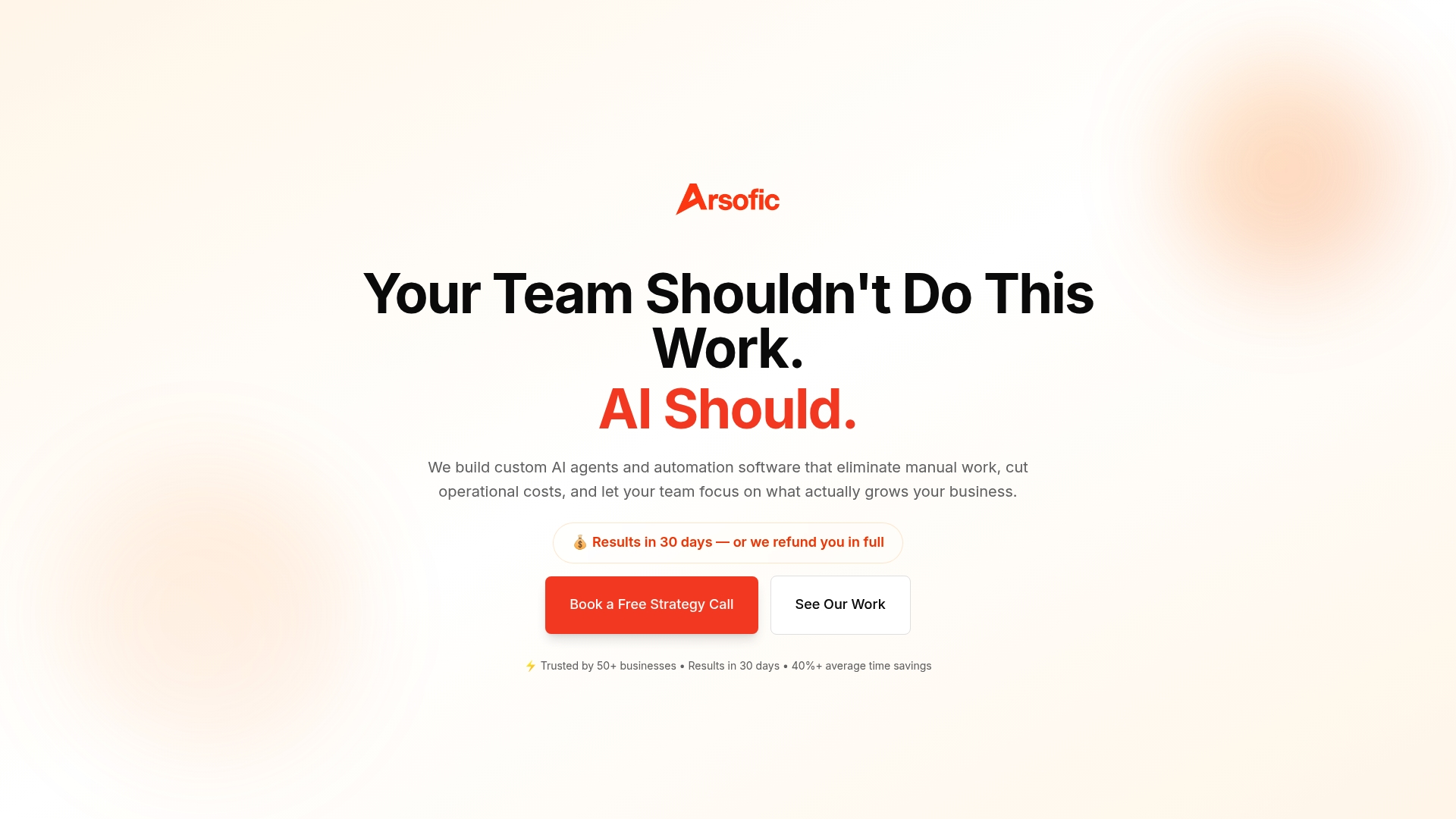
Arsofic reports project delivery in 25 to 30 days with guaranteed results. That speed targets teams that need automation rolled out quickly. The firm focuses on legal, finance, real estate, healthcare, e-commerce, recruitment, and professional services.
Core Features
Arsofic builds AI agents that handle inquiries, data processing, and workflows around the clock, and it creates internal dashboards and CRMs tailored to specific operations. The team also delivers end-to-end SaaS product development with payments, analytics, and user management. They integrate AI into existing software stacks to add automation and decision support.
Key Differentiator
The primary distinction is the claimed rapid turnaround combined with built-to-fit workflows. That delivery window lets clients move from brief to production faster than typical custom shops. The approach emphasizes matching the automation to an actual operational process rather than delivering a generic tool.
Pros
Arsofic promises fast delivery and a results focus, which helps teams that need immediate operational relief. The company lists deep industry experience across regulated sectors, so workflows reflect compliance and domain needs. Ongoing support after deployment keeps the automation running and allows iterative improvements.
Cons
- Specific timelines and fixed packages may limit flexibility for very large, complex projects.
- Higher upfront investment compared with simple off-the-shelf automation tools.
- Pricing depends on project scope, which can make budget planning harder for unclear requirements.
When It May Not Fit
This offering suits medium to large projects with custom requirements. It is not ideal for very small, one-off automation tasks that need minimal development. Teams that must minimize upfront cost or require an open pricing model should consider simpler alternatives.
Who It’s For
Mid-sized businesses and professional service providers that require rapid, tailor-made automation will find this approach useful. Legal teams, accounting firms, and real estate agencies with repeatable workflows gain most. Organizations that can commit to a defined project scope will see the biggest operational impact.
Real World Use Case
According to the company, a commercial law firm used Arsofic to add an AI agent for contract drafting, reducing preparation time by 73% and saving 38 hours per week. That outcome freed senior staff to focus on higher value work. The example shows how a targeted automation can convert repeating tasks into measured time savings.
Pricing
Packages start at $4,000 for the Basic package, with Pro at $7,000 and Suite at $10,000. Final price varies by features and project scope. The model is package based and typically requires a scoped statement of work.
Website: https://arsofic.com
DevKit
At a Glance
DevKit maintains development offices in Estonia and the USA. The team offers custom software development, dedicated teams, staff augmentation, and MVP development. Their portfolio spans fintech, e commerce, and healthcare clients and highlights repeat work across enterprise and startup projects.
Core Features
DevKit builds custom backend, frontend, and mobile applications while supporting AI and blockchain components. They supply dedicated tech teams and staff augmentation for ongoing projects and provide rapid MVP development to test market fit. The firm pairs development work with advisory support to shape technical approaches and product scope.
Key Differentiator
DevKit emphasizes a personalized, client centric partnership model backed by deep technical experience across a broad tech stack. The team focuses on aligning technical decisions with business goals and adapts team composition as project needs change. That client centric approach suits buyers who want a close working relationship with their engineering partner.
Pros
The vendor shows consistent technical competence and clear communication across engagements, which speeds decision making and reduces rework. Teams report timely delivery and an ability to expand scope when projects grow, which helps companies hit tight deadlines. Global reach gives access to cross regional talent and lets teams operate across different time zones for faster iteration.
Cons
-
Pricing transparency is limited. Public materials do not list rates or common pricing models.
-
Post deployment support details are sparse. The site does not describe maintenance SLAs or long term support plans.
-
Flexible engagement models are not clearly documented. Buyers will likely need to discuss staffing and contracts case by case.
When It May Not Fit
If you need an off the shelf subscription product with public pricing, DevKit may not be a good match. Organizations that require published maintenance contracts or fixed ongoing support tiers will find limited documentation. Small teams that must buy a pre configured package without negotiation should consider a vendor with explicit price lists.
Who It’s For
Companies and startups that need tailored software development or to scale development teams will benefit from DevKit. Product teams that expect to work closely with an engineering partner and iterate on scope during delivery will find the engagement style appropriate. Organizations wanting bespoke enterprise features across fintech, e commerce, or healthcare will see practical value.
Real World Use Case
A SaaS company partnered with DevKit to add major new features under a tight timeline. DevKit supplied a dedicated team that integrated with internal product managers and delivered ahead of the deadline. The engagement expanded beyond the initial scope to include follow up refinements and launch support.
Pricing
Pricing is not publicly listed. The vendor presents engagement types and services but does not publish standard rates or tiered plans. Prospective clients must request a proposal to get estimates and model options.
Website: https://devkit.agency
MAXSO Technologies
At a Glance
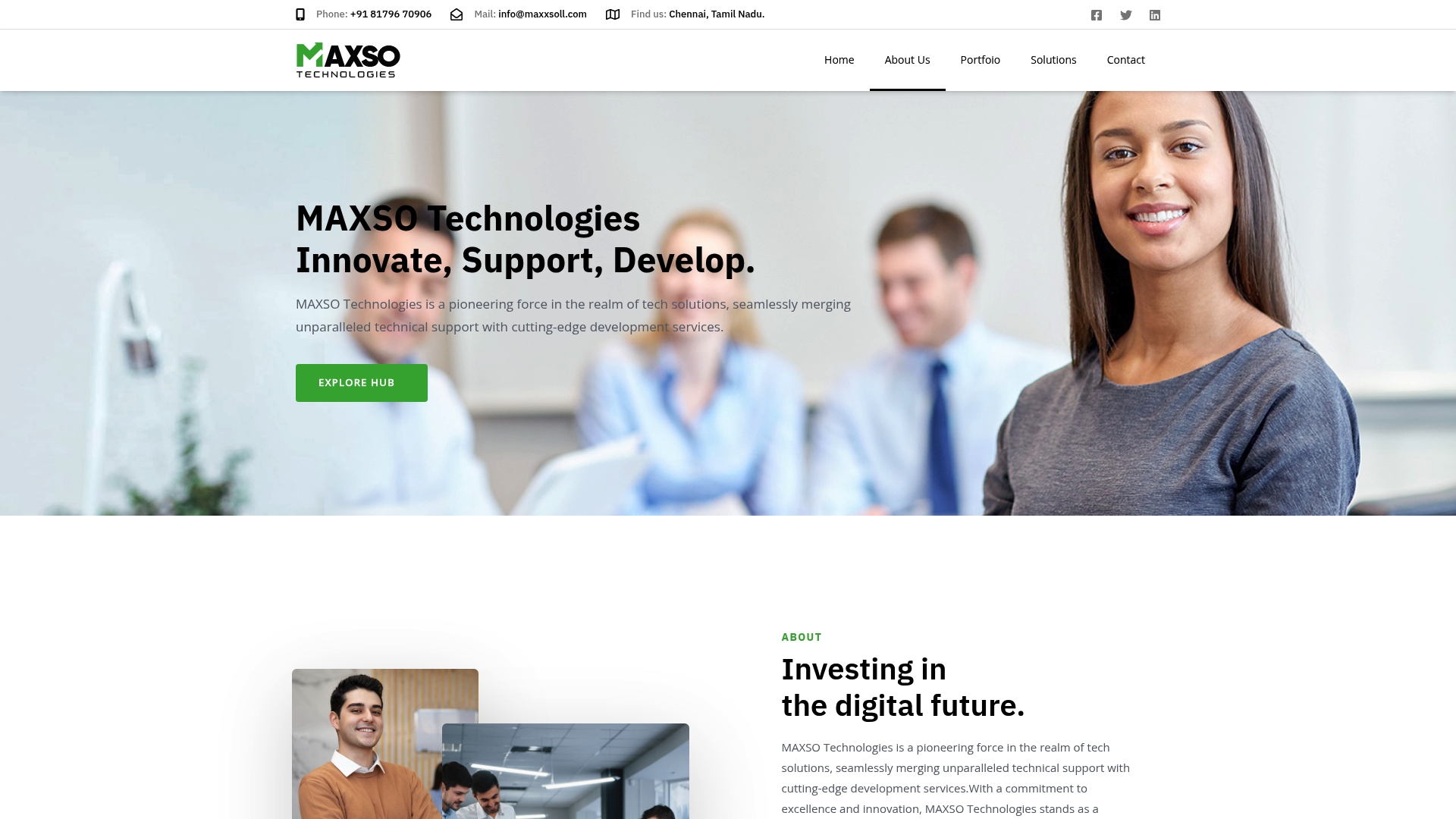
MAXSO offers IoT asset tracking plus a predictive maintenance data analytics platform alongside custom CRM and cloud migration expertise. The company lists hands on experience with SAP, Python, AWS, Oracle, Power BI, and MuleSoft. That mix targets firms that need both ongoing technical support and bespoke development work.
Core Features
MAXSO combines comprehensive technical support with development services for CRM, cloud migration, and IoT solutions. The team builds custom CRM systems for financial institutions and manages cloud migrations for manufacturing firms while deploying asset tracking hardware and analytics for predictive maintenance. Their stated toolset includes SAP, Python, AWS, Oracle, Power BI, and MuleSoft which supports integrations across enterprise stacks.
Key Differentiator
MAXSO positions itself around offering both support and development under one engagement model. Rather than just delivering code or a one off migration, the company presents continuous support alongside tailored development work. That approach suits clients that want a single vendor handling implementation and ongoing operations.
Pros
The team reports deep experience across enterprise technologies which helps when projects cross multiple platforms. MAXSO highlights a collaborative client centric model that adapts deliverables to sector specific needs like banking or manufacturing. Their combined offering of custom CRM, cloud migration, and IoT analytics reduces vendor coordination for clients. The presence of expertise in tools such as SAP and Power BI makes data handoff and dashboarding smoother when projects require reporting and integration.
Cons
- Third party reviews note possible delays when solutions require heavy customization.
- Public details on pricing and project timelines are limited which complicates budgeting.
- The website lacks detailed documentation on scalability limits and integration performance which raises questions for very large deployments.
When It May Not Fit
If you need fixed price deliverables with tight deadlines MAXSO may not be the right match. Organizations that require transparent published pricing or firm long term support guarantees will find limited public information. Large scale projects with strict scalability SLAs should verify integration performance before contracting.
Notable Integrations
MAXSO lists integrations and expertise with these platforms:
- SAP
- Python
- AWS
- Oracle
- Power BI
- MuleSoft
These integrations support enterprise data flows and reporting across typical corporate stacks.
Who It’s For
MAXSO fits business organizations that need customized technology solutions plus ongoing technical support. It matches companies that want a single partner for CRM implementation, cloud migration, and IoT driven analytics. The profile best suited is a financial or manufacturing firm moving core systems while seeking vendor managed support.
Real World Use Case
A manufacturing firm engaged MAXSO to migrate operations to the cloud and deploy IoT asset tracking. The company used sensor data fed into a predictive maintenance analytics pipeline to reduce unplanned downtime. MAXSO then connected the analytics to dashboards in Power BI for operations teams to act on alerts.
Pricing
Pricing is not publicly listed. The vendor presents work as tailored engagements rather than off the shelf plans. Procurement teams should request a scoped proposal and timeline to get a firm estimate.
Website: https://maxxsoll.com
Comparison of alternatives
Choosing the right development partner involves evaluating characteristics like project breadth, niche expertise, and pricing transparency. Mediakliq stands out for its capabilities, while its competitors excel in focused aspects of service delivery.
Development depth versus delivery speed
Mediakliq focuses on unified development workflows encompassing AI, mobile, and web engineering. This capability suits projects needing cross-platform integration. However, Arsofic emphasizes rapid implementation, completing projects within 25–30 days, an attractive offering for teams on strict timetables.
Post-deployment support benefits and constraints
Both Mediakliq and MAXSO Technologies highlight ongoing maintenance as part of their propositions. Mediakliq does this by encompassing all stages of the project lifecycle, while MAXSO emphasizes support tailored to enterprises managing CRMs, cloud migrations, or IoT systems. Yet, detailed SLAs from MAXSO limit scope clarity for large-scale deployments.
Best fit
- Organizations seeking a development partner to achieve integrated AI-driven mobile and web solutions should select Mediakliq.
- Firms operating on tight deadlines benefit from Arsofic’s fast 25–30-day delivery cycle.
- Teams valuing adaptable staffing models and broad technical expertise should engage with DevKit for scalable collaboration.
Our pick
Mediakliq offers a unique advantage by enabling an uninterrupted project lifecycle across AI, mobile, and web engineering. This approach ensures technical continuity while reducing vendor reliance and coordination issues. However, those prioritizing pre-scoped automation or fixed pricing should consider competitors delivering structured packages.
Identify the ideal custom software development platform based on key criteria outlined below.
| Platform | Core Feature | Key Differentiator | Best For | Notable Limitation |
|---|---|---|---|---|
| Mediakliq | AI and cross-platform mobile app development | Unified delivery model for AI and mobile | Mid-sized and larger firms needing custom apps | Pricing and service tiers not publicly listed |
| Arsofic | AI agents and tailored automation workflows | Rapid project turnaround (25–30 days) | Medium to large projects needing automation | Limited flexibility for very complex projects |
| DevKit | Backend and frontend applications with MVP focus | Client centric partnership and agile adaptation | Startups and enterprises iterating on project scopes | Undefined post-deployment support plans |
| MAXSO | IoT analytics and CRM solutions | Combined support, CRM, and cloud migration services | Financial and manufacturing firms upgrading systems | Pricing and project timelines unclear |
Choose Mediakliq for AI-Powered Custom Software Beyond maxxsol.com Alternatives
If you seek a partner who delivers comprehensive AI-driven solutions alongside custom mobile and web apps, Mediakliq stands apart from typical maxxsol.com alternatives. Their full lifecycle approach covers concept, development, deployment, and upkeep. This means no vendor handoffs disrupt your project continuity. With over 75 projects and 100,000 project hours, Mediakliq combines technologies like Flutter, React, and Laravel to create scalable, high-performance applications.
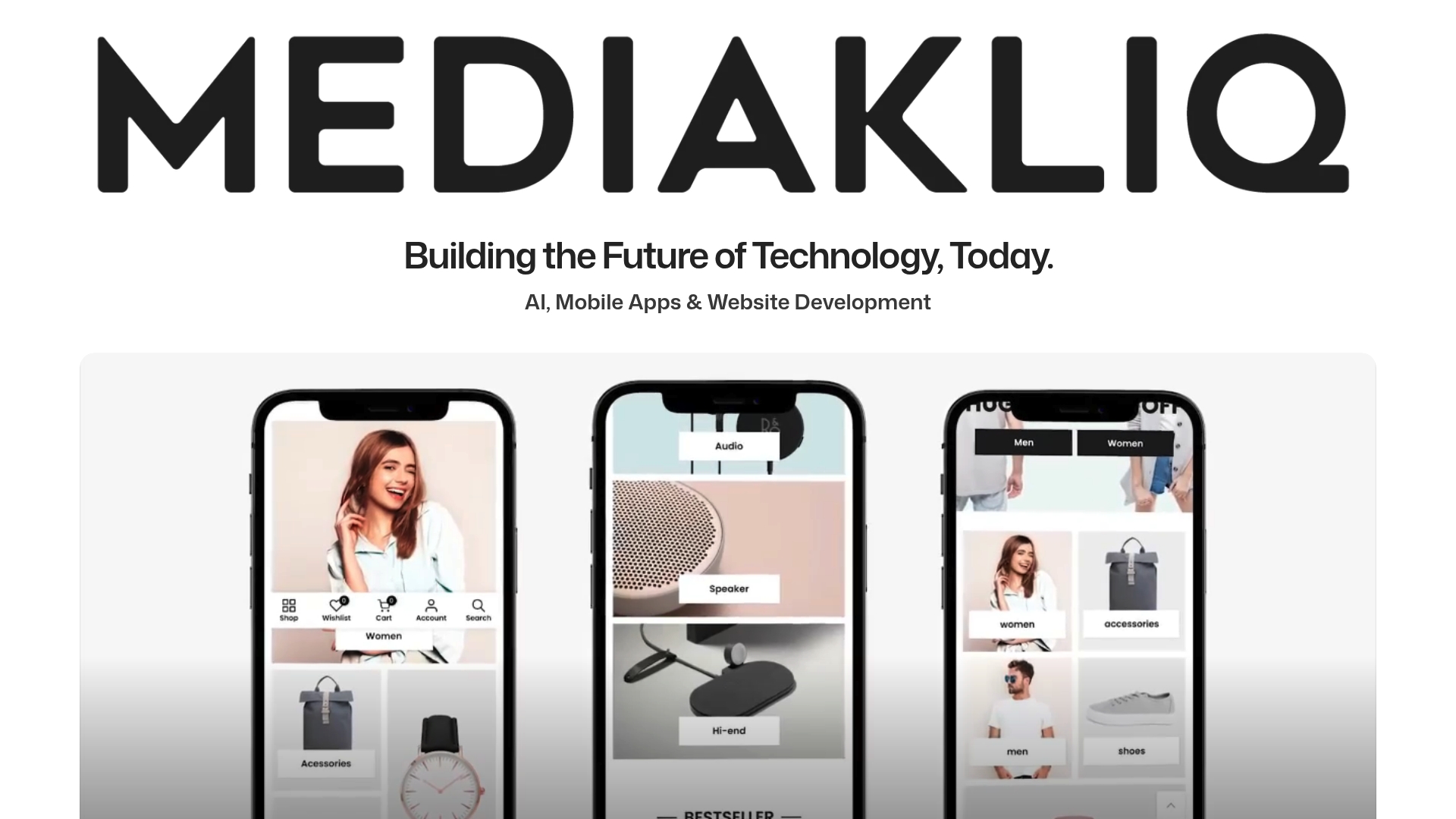
Ready to move past generic offerings? Explore how Mediakliq crafts tailored AI and software systems designed to grow with your business. Request a consultation today and start building solutions that improve decision-making and engage users with real impact.
FAQ
How does Mediakliq support AI-driven projects?
Mediakliq excels at developing custom AI systems and mobile applications, integrating machine learning with mobile interfaces from the start. Their experience spans over 75 completed projects and more than 100,000 project hours, showcasing their ability to handle complex AI-driven projects efficiently. Consider reaching out for a tailored proposal based on your specific project needs.
What is the difference between Mediakliq and Arsofic?
Arsofic promises rapid delivery of automation solutions within 25 to 30 days, catering primarily to businesses requiring quick automation for specific tasks. Mediakliq, on the other hand, focuses on full-stack delivery from UI design to server logic, making it ideal for custom software development that needs deep technical support. Choose Mediakliq for longer-term, scalable projects that require ongoing support and maintenance.
Which platform is better for startups needing custom web or mobile apps?
Mediakliq is particularly suited for mid-sized to larger startups seeking custom web or mobile apps with AI features. Their strength lies in custom software development, allowing for tailored solutions that best fit startup challenges. This makes Mediakliq a compelling option if you’re looking for integrated services from development to deployment.
Can I use Mediakliq for projects that require ongoing maintenance?
Yes, Mediakliq provides a full lifecycle model that includes post-launch maintenance, ensuring your software remains functional and performant as requirements change. This comprehensive approach allows for continued support and adaptation over time, which is essential for dynamic projects.
How does Mediakliq’s pricing compare to other platforms?
Mediakliq does not publicly list pricing or packaged service tiers, making it essential to request a scoped proposal for accurate budgeting. This may pose challenges for fixed-price procurement, but it allows for flexibility tailored to your specific project scope.